

Leave the next owner more than keys.
Bring the home’s documents, materials, maintenance and improvements into one organised record before you sell. A practical history of the property, ready to pass on with it.
No credit card · Forward a policy, watch it file itself
- Property baseline
- Complete
- Documents and materials
- In review
- Maintenance history
- Current
- Handover state
- Preparing
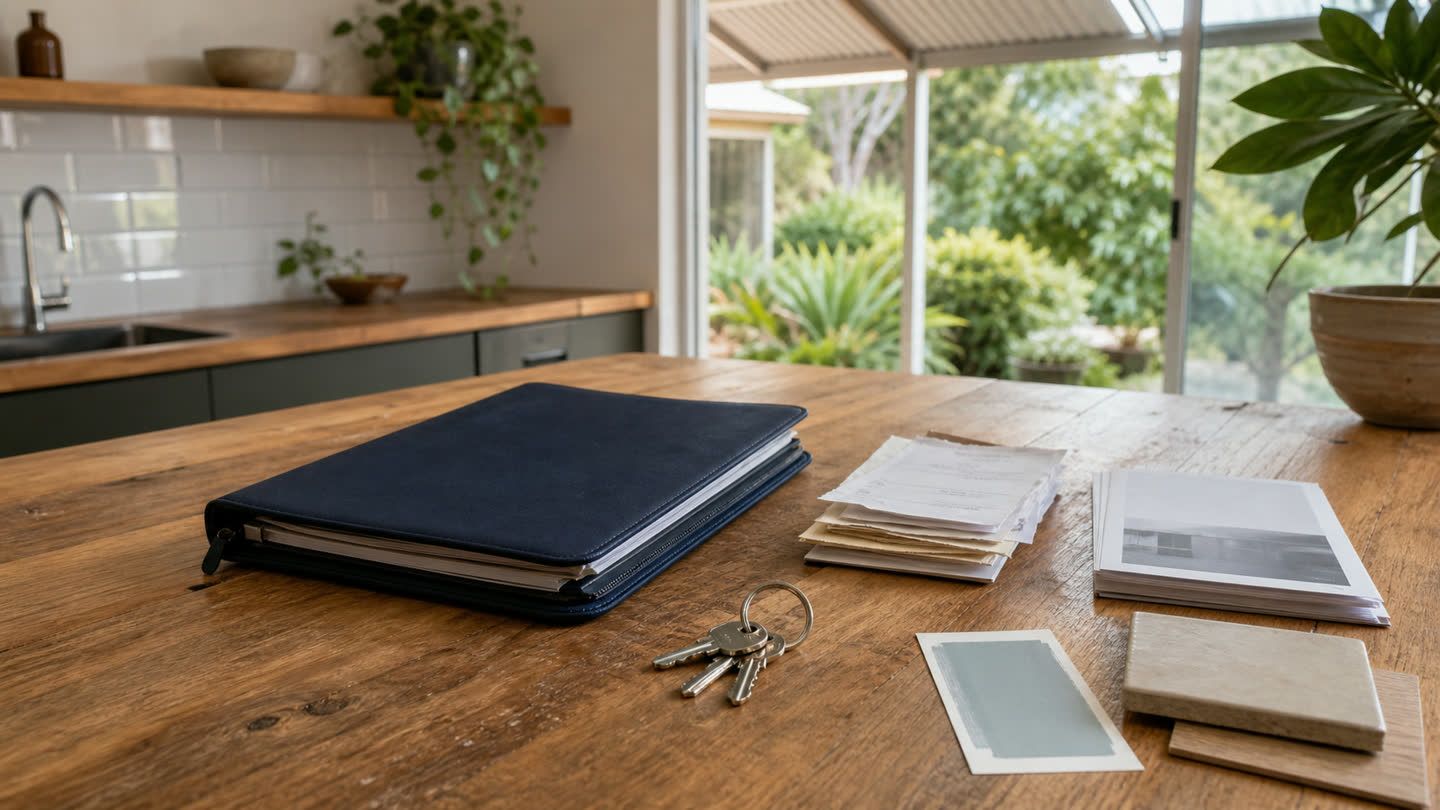
Most of a home’s history leaves in drawers.
Receipts sit in email, manuals in cupboards, paint details in memory and service dates on appliance stickers. A Home Logbook brings the useful parts together before the property changes hands.
Scattered
Indexed
Build the handover in three passes.
Start with recorded property context, then add what only the owner knows.
- Pass 01
Start with the property.
Enter the address. The 7-day Pro trial opens the logbook with its own email address — forward the documents you already have and they file themselves.
- Pass 02
Add what property data cannot know.
Record materials, improvements and maintenance. Photograph receipts, warranties and manuals; review the suggested filing details.
- Pass 03
Review the living record.
Correct what needs correcting, leave unknowns visible and prepare the useful property record to pass on with the home.
Record the answers that disappear after settlement.
Not every home has every document. Add what you know and keep the gaps honest.
Structure and finishes
Roof, exterior, flooring, tiles, paint colours and other materials that are difficult to identify later. A date with a document is more useful than a polished claim — when evidence is missing, the record should say so.
Home systems
Heating and cooling, hot water, electrical, plumbing and other installed systems, with known model and installation details. Connect warranties, manuals and service history to the system itself.
Documents
Receipts, invoices, warranties, manuals, plans and supporting paperwork. Keep private financial and identity information out of the transferable record.
Work completed
Renovations, repairs and replacements, recorded with dates and available evidence. Do not reconstruct missing dates as certainty.
Maintenance
What was serviced, when it was done and what is likely to need attention next. The history stays beside the system and source document it relates to.

Pass on the record, not just the keys.
A clear set of manuals, material references, service records and dates gives the next owner a practical place to begin — without presenting the logbook as a substitute for the sale contract or required disclosure.
From the first tidy-up to final handover.
The property record changes as the campaign moves, but its evidence stays attached.
- Before listing
Collect
Start with the report and gather paperwork spread across email, cupboards and old folders.
- During the campaign
Update
Add repairs, replacements and services completed while preparing the home.
- Before settlement
Review
Remove personal or account-specific paperwork and confirm what should move with the property.
- At handover
Pass it on
Give the next owner context instead of an empty folder.
A record is evidence, not a sales claim.
Home Logbook keeps dates, documents and property data together. It does not reconstruct missing history or replace required disclosure.
Recorded
Known, document missing
Unknown
Home Logbook does not replace the contract of sale, statutory disclosure or advice from your conveyancer, solicitor or selling agent.

The record can keep going after the sale.
The next owner can continue adding services, documents and improvements instead of rebuilding the history from zero.
Prepare the record with Pro.
Organise the property now and leave a useful record behind.
Home Logbook Pro
or $182.40 / year
No credit card · Forward a policy, watch it file itself
Prepare the home’s record before it changes hands.
Start with the property report. Add the documents and details only an owner can know.
No credit card · Forward a policy, watch it file itself